

Every creator eventually faces the same question: should this idea become a Short or a long video? The two formats look similar on the surface — both live on YouTube, both can reach new viewers — but they work in different ways, reward different strengths, and serve different goals. Understanding YouTube Shorts vs long videos is not about picking a winner. It is about knowing when to post each one so that both formats help your channel instead of competing with each other.
Shorts are fast, vertical, and built for quick discovery. Long videos are slower, deeper, and built for trust. A channel that uses only one format leaves something on the table. In this guide, you will learn what each format does well, how to decide which format fits an idea, and how to plan a schedule that uses both without burning out.
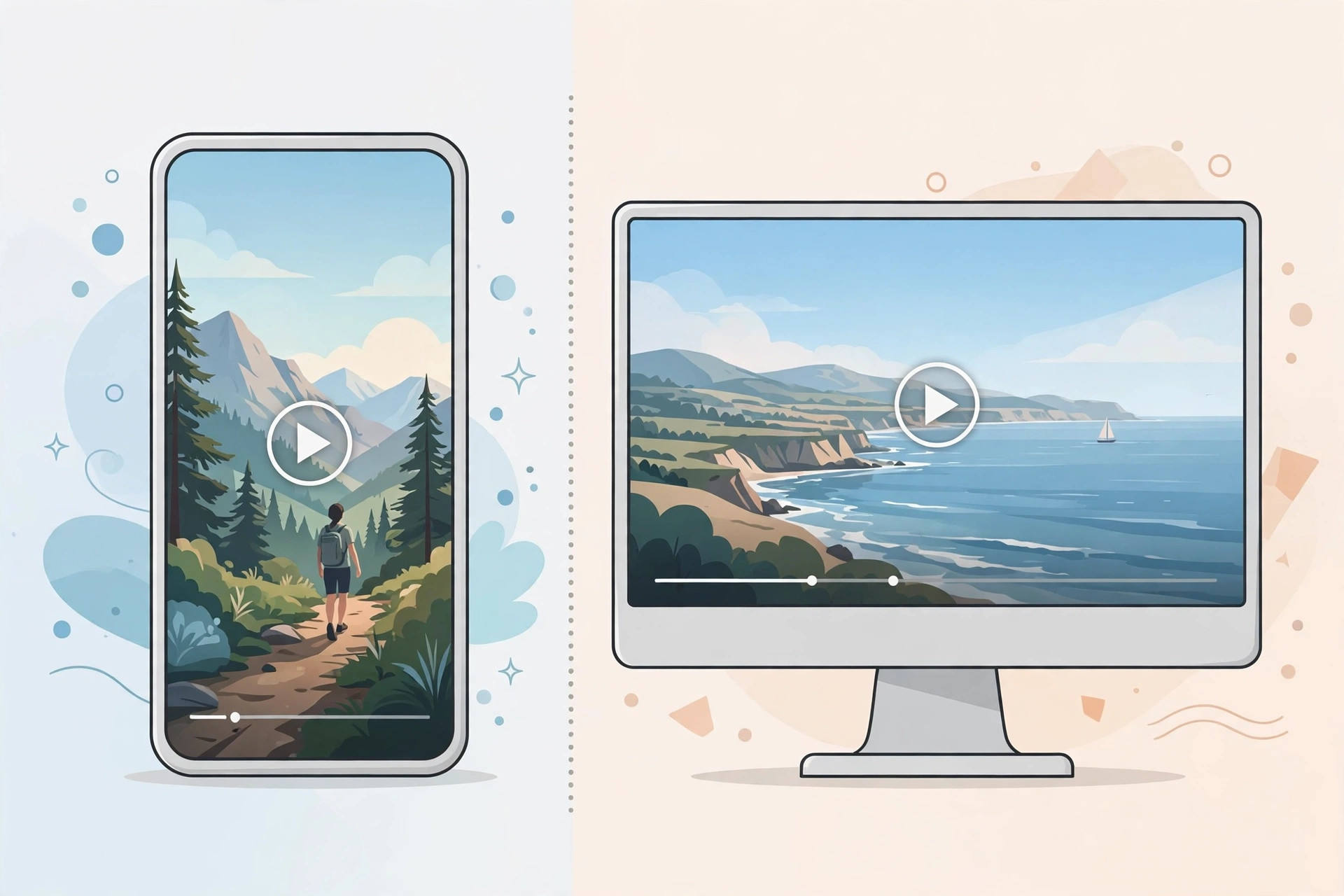
What Shorts Do Well
Shorts are vertical videos up to three minutes long, shown in a fast-scrolling feed. Their greatest strength is discovery. A viewer who has never heard of you can stumble on your Short, watch it in seconds, and decide to check out your channel. That low barrier makes Shorts a strong tool for reaching new people, testing ideas, and staying visible between longer uploads.
Shorts are also forgiving to produce. A single idea, one clear hook, and a quick payoff are often enough. You can film several Shorts in one session, and a Short that misses does not cost you the days of work a long video might. That makes Shorts a good place to experiment: try a new topic, a new style, or a new hook, and watch how viewers respond before you commit to a full video.
The trade-off is depth. A Short rarely has room for a full explanation, a detailed tutorial, or a story with several layers. Viewers may enjoy a Short and still know very little about you, your expertise, or what your channel offers. Shorts introduce you. They rarely, on their own, build the kind of trust that turns a casual viewer into a regular one.
What Long Videos Do Well
Long videos are where depth lives. A ten- or fifteen-minute video can walk a viewer through a full process, answer follow-up questions before they are asked, and show your personality in a way a thirty-second clip cannot. That depth is why long videos are so good at building trust. A viewer who watches you explain something thoroughly is more likely to subscribe, return, and recommend your channel.
Long videos also give you room to structure. You can open with a promise, build through steps or examples, and close with a clear next action. Chapters, examples, and on-screen demonstrations all fit naturally in a longer format. And because a long video covers a topic in full, it can keep attracting viewers through search for a long time after publication, as people look for answers to the same questions.
The trade-off is effort. Long videos take more planning, recording, and editing. They also ask more of the viewer: someone must choose to spend ten minutes with you. That is why the topic, title, and opening of a long video matter so much. A long video must earn its length in the first thirty seconds, or the viewer will leave before the good part.
How to Decide: Short or Long?
When an idea arrives, ask yourself three questions before choosing a format.
1. How much does the viewer need to understand?
If the idea can be understood in under a minute — a single tip, a quick reaction, a surprising fact — it is a natural Short. If the viewer needs steps, context, or examples to use the idea, it deserves a long video. A good rule: if explaining the idea properly takes more than a minute of talking, do not force it into a Short.
2. What is the viewer trying to do?
A viewer scrolling the Shorts feed is looking for entertainment or a quick spark of curiosity. A viewer searching YouTube or browsing your channel is often looking for an answer, a tutorial, or a deeper look. Match the format to the moment: quick spark for Shorts, full answer for long videos.
3. What do you want the video to do for your channel?
If your goal is to reach new people and test a topic, a Short is a low-cost way to start. If your goal is to build trust, demonstrate expertise, or create a video that keeps working for months, a long video is usually the better investment. Neither goal is more important than the other. A healthy channel needs both reach and depth.
When to Post Each One
Timing matters less than consistency, but a few patterns help most creators.
- Post a Short when you have one sharp idea. A single tip, a before-and-after, a common mistake, or a quick teaser for a longer video all make good Shorts. Post Shorts when the idea is fresh and self-contained, not when you are trying to stretch a thin idea into a long video.
- Post a long video when the topic needs room. Tutorials, reviews, deep dives, stories, and walkthroughs belong in long form. If you find yourself cutting important steps to fit a Short, that is a sign the idea needs a long video.
- Use Shorts between long uploads. If you publish one long video a week, one or two Shorts between uploads can keep your channel active without doubling your workload. Keep them light: repurpose a moment from the long video, answer a comment, or share one tip related to the same topic.
- Let Shorts test topics for long videos. If a Short on a topic gets an unusually strong response, consider making a full video on that topic. The Short becomes both a test and a trailer, and the long video gives interested viewers somewhere to go next.
- Keep long videos on a schedule you can sustain. One strong long video a week beats three rushed ones. Viewers subscribe for quality and consistency, not for volume alone.
How Shorts and Long Videos Work Together
The strongest approach is not Shorts or long videos — it is Shorts feeding long videos, and long videos feeding Shorts.
Start with a long video on a topic you know well. From that video, pull two or three moments that work on their own: a surprising tip, a common mistake, a quick demonstration. Turn each moment into a Short. Each Short points curious viewers back to the full video. The Shorts reach new people; the long video converts them into subscribers.
Then reverse the flow. When a Short performs well, read its comments. The questions viewers ask in the comments are often the outline of your next long video. You already know the topic has an audience, because the Short proved it. This loop — long video to Shorts, Shorts to long video — keeps your ideas connected and your workload manageable, because every piece of content supports the next one.
Common Mistakes to Avoid
- Turning every idea into a Short because it is easier. Easy content builds reach, but a channel with no depth struggles to keep the viewers it attracts. Make room for long videos that show what you know.
- Stretching a Short idea into a long video. Padding a one-minute idea into ten minutes frustrates viewers and teaches them to distrust your openings. If the idea is thin, keep it short.
- Judging Shorts and long videos by the same numbers. Shorts and long videos are measured differently. Comparing a Short’s view count directly with a long video’s view count tells you little. Compare Shorts with Shorts, and long videos with long videos.
- Posting both formats with no connection between them. A channel where Shorts and long videos cover unrelated topics confuses new viewers. Let the formats share themes, so a viewer who finds you through a Short recognizes your long videos as more of what they liked.
- Burning out by doubling your output. Adding Shorts should not mean doubling your workload overnight. Start with one or two Shorts a week, repurposed from your long videos, and increase only if the schedule stays sustainable.
FAQ
Should beginners start with Shorts or long videos?
Beginners can start with either, but the two formats teach different skills. Shorts teach you to hook attention quickly. Long videos teach you to structure and explain. If you are new, try both in small numbers and notice which format you enjoy making and which one your viewers respond to.
Can Shorts hurt a channel that focuses on long videos?
Shorts do not automatically hurt a long-form channel. Problems arise when Shorts and long videos target completely different audiences, so subscribers gained from Shorts never watch the long videos. Keeping the topics connected helps both formats serve the same audience.
How many Shorts should I post per week?
There is no fixed number. A sustainable rhythm for many creators is one or two Shorts between long uploads. Consistency matters more than volume, so choose a number you can maintain for months, not just for one busy week.
Should a Short and a long video cover the same topic?
Yes, often. A Short can share one tip from a long video, answer one question the long video raises, or tease the long video’s main idea. Sharing a topic across formats is efficient and helps viewers move from one format to the other.
Do I need different thumbnails for Shorts?
Shorts are usually discovered in a scrolling feed rather than through thumbnails, so the opening seconds of the Short matter more than a thumbnail. For long videos, the title and thumbnail remain essential, because viewers choose whether to click before they see a single second.
What to Do Next
Look at your next three video ideas and assign each one a format using the three questions above: how much does the viewer need to understand, what is the viewer trying to do, and what should the video do for your channel. Then plan one week in which a long video and one or two Shorts support each other — Shorts that pull moments from the long video, and a long video that answers the questions your Shorts raise.
You do not need to choose between Shorts and long videos. You need a reason for each one you post, and a plan that lets them work together. That is how a channel grows in both reach and depth.
Want help building a video strategy that fits your channel? Explore our YouTube services, browse more guides in our YouTube articles, see everything we offer on our services page, or contact us to talk about your channel.