
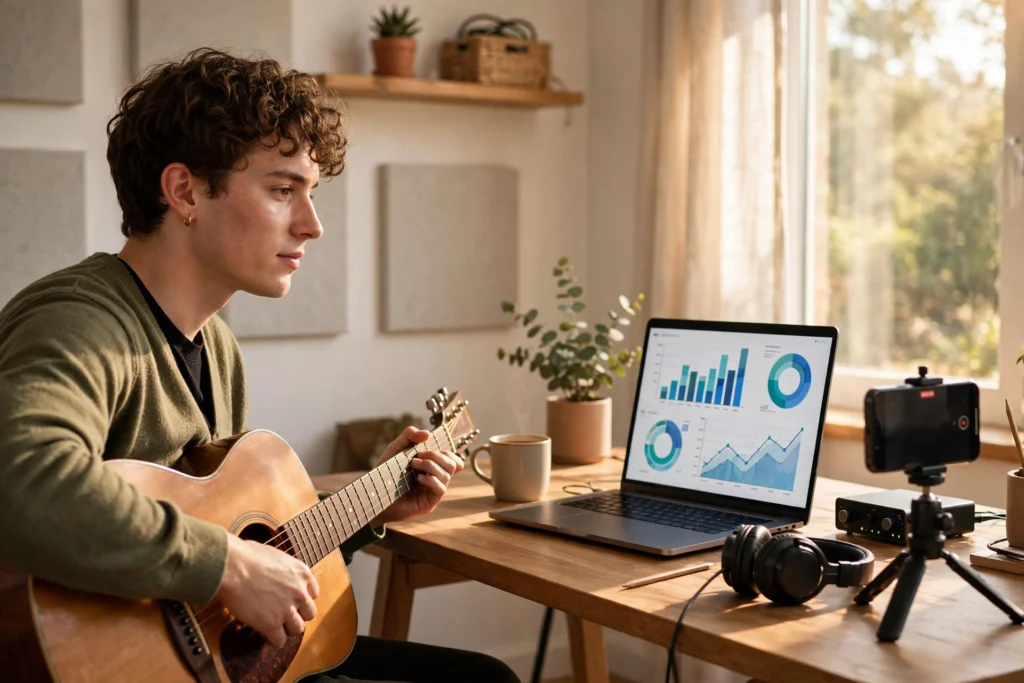
Releasing music without a label can feel both freeing and overwhelming. You control the sound, the timing, and the story. At the same time, you carry every job yourself: planning the release, reaching listeners, and keeping the momentum going after release day. The good news is that independent artists have more tools and channels than ever before. You do not need a large budget or a big team to promote your music well. You need a clear plan, honest work, and patience.
Promotion works best when it grows out of the music itself. Listeners do not connect with a release because it was pushed in front of them. They connect because the song means something, because the story behind it feels real, or because someone they trust shared it. This guide walks through practical ways to promote your Spotify music without a label, built around that simple idea: make the music easy to find, easy to understand, and easy to share.
Start With a Release Your Promotion Can Stand Behind
Before you think about promotion, be honest about the release itself. Is the song finished? Does the recording sound clean on headphones and on a small speaker? Is the cover art clear and easy to recognise? Promotion can bring people to a song, but only the song itself can make them stay, save it, or listen again.
Give yourself time to prepare. A rushed release often leaves no room for planning. When you finish a song, listen to it with fresh ears after a short break. Ask a few trusted listeners for their honest reactions. If something feels unfinished, fix it before you set a release date. A strong, well-prepared release gives every later promotion effort a better chance.
It also helps to plan the release as a small campaign rather than a single day. Think about what you will share before the release, on release day, and in the weeks after. A song does not need to find its whole audience in one day. Many songs grow slowly, through repeated listens, shares, and playlist adds over time.
Tell the Story of the Song on Social Media
Social media is one of the most direct ways for independent artists to reach listeners. The key is to share the story of the song, not just the link. People scroll past a plain link far more easily than they scroll past a human moment: the idea behind a lyric, the feeling that shaped the chorus, or a short clip of the song being made.
Short videos work well because they let listeners hear the music while they see the person behind it. You might share a clip of you playing the opening, a moment from the recording process, or a simple explanation of what the song is about. Keep the clips short and clear. A listener should understand the feeling of the song within a few seconds, even if they have never heard your name before.
Consistency matters more than volume. A few thoughtful posts spread across the weeks around a release will usually serve you better than a flood of posts on one day. Vary the content: one post might focus on the story, another on the sound, another on a lyric, and another on the people who helped make it. Each post gives a different listener a different reason to listen.
Pitch Playlists and Build Your Own
Playlists remain one of the main ways listeners discover new music on Spotify. There are two sides to this: pitching your music to playlists run by others, and building playlists of your own.
When you pitch to a playlist, take time to find playlists that genuinely fit your sound. A playlist that focuses on a similar mood, genre, or style is far more likely to welcome your song than a large, general playlist with no clear focus. Read the playlist description, listen to a few songs on it, and make sure your song belongs there. When you reach out, keep your message short and honest. Say what the song is, why it might fit, and thank the curator for listening. A respectful pitch stands out far more than a long, exaggerated one.
Building your own playlists is just as valuable. Create playlists around a mood, a theme, or a kind of listening moment, and include your own song alongside songs by other artists you admire. Share the playlist with your listeners. Over time, a playlist you curate can become a steady place where new listeners discover your music in context, rather than in isolation.
Use Email and Direct Channels You Own
Social media platforms change their rules and their reach often. Email, by contrast, is a channel you own. A simple mailing list lets you reach people who have already shown interest in your music, without depending on an algorithm to show them your post.
You do not need a large list to start. Even a small list of people who genuinely want updates is valuable. Use it to share news about releases, upcoming shows, and new videos. Keep your emails short and personal. A brief note about a new song, with a link to listen, is enough. People appreciate honesty and brevity far more than long, sales-like messages.
Other direct channels can help too. A simple website, a community group, or a messaging channel where fans can follow your work gives you a stable home for your music. Social media can bring people in, but your own channels help you keep in touch with them over time.
Collaborate With Artists at Your Level
Collaboration is one of the most natural ways to reach new listeners. When you work with another independent artist, you each bring your own audience, your own ideas, and your own strengths. A collaboration might be a song together, a shared performance, a joint playlist, or simply supporting each other’s releases.
Look for artists whose work you genuinely enjoy and whose audience is similar in size to yours. A collaboration works best when both sides benefit and both sides are excited about the result. Be clear about expectations from the start: who does what, how the song will be shared, and how you will both promote it. Clear, friendly communication prevents most misunderstandings.
Collaboration also helps you grow as an artist. Working with someone else can push you toward new sounds, new ideas, and new ways of writing. Those creative gains often matter as much as the extra listeners.
Play Live, Even in Small Rooms
Live performance remains one of the strongest ways to turn a casual listener into a loyal one. A person who hears you play in a small room, meets you afterwards, and hears the story behind a song is far more likely to follow your work than someone who only sees a link online.
Small shows count. A short set at a local venue, a community event, a small gathering, or an online live session can all create real connections. You do not need a large stage to make an impression. A focused, honest performance in front of a small audience often leaves a stronger memory than a distant show in a large hall.
When you play live, make it easy for new listeners to find you afterwards. Tell them where to find your music, mention your Spotify page by name, and invite them to follow you if they enjoyed the set. A short, friendly invitation at the end of a good performance is one of the most effective forms of promotion there is.
Turn Listeners Into Repeat Listeners
Getting someone to press play once is only the first step. The real goal is to earn a second listen. Repeat listeners are the ones who save a song, add it to their own playlists, share it with a friend, and return for the next release.
One way to encourage repeat listening is to give listeners a reason to come back. That might be a new release on a regular schedule, a behind-the-scenes video, a live session, or a playlist you update. Another way is to make your music easy to find: keep your artist profile complete, keep your song titles and descriptions clear, and make sure listeners can find you by name without confusion.
Pay attention to what your listeners respond to. Notice which songs get saved, which posts get thoughtful comments, and which shows draw the warmest response. Those signals tell you what is working. Use them to guide your next release, rather than chasing every trend.
What Never to Do
Some shortcuts promise fast growth but damage your career in the long run. Never buy streams, followers, or playlist placements. Never spam people with links they did not ask for. Never mislead listeners about who you are, what a song is, or how popular it is. These practices create hollow numbers that do not reflect real listeners, and they can put your music and your artist profile at risk.
Fake numbers also teach you nothing. A bought stream cannot tell you whether someone liked the song, and a bought follower will never come to a show or share your music. Real growth is slower, but it is built on people who actually listen and care. That is the only kind of growth that lasts.
Spam is just as harmful. Sending the same link to strangers, flooding comments, or messaging people who have shown no interest does not build an audience. It builds a reputation you do not want. A single thoughtful message to the right person is worth far more than a hundred unwanted ones.
Frequently Asked Questions
How far in advance should I plan a release?
Give yourself enough time to prepare the song, the cover art, and a simple promotion plan. Planning ahead lets you share teasers, pitch playlists, and tell your listeners what is coming. A rushed release leaves little room for any of that. Even a few weeks of preparation can make a real difference.
Should I focus on one platform or many?
Start with the places where your listeners already are. It is better to do a good job on one or two channels than to spread yourself thin across many. Once you have a steady routine, you can expand gradually to other places that fit your audience.
How do I get my first listeners without a label?
Begin with the people closest to you: friends, local audiences, listeners of similar artists, and communities you already belong to. Share the story of your song, play live when you can, and collaborate with artists at your level. Small, honest steps build a real audience over time.
Is it worth promoting an older release?
Yes. A good song does not expire on release day. You can share it again with a new story, add it to a playlist, perform it live, or pair it with a new release. Many songs find their audience weeks or months after they first appear.
What to Do Next
Pick one release and build a simple plan around it. Share its story on social media, pitch it to a few fitting playlists, tell your email list, and look for one collaboration or live opportunity that fits. Then keep going after release day. Promotion is not a single event. It is a steady habit of showing up for your music and for the people who listen to it.
If you would like help promoting your music, contact us and tell us about your next release. You can also explore our Spotify growth services, browse more guides in our articles section, or view everything we offer on our services page.