
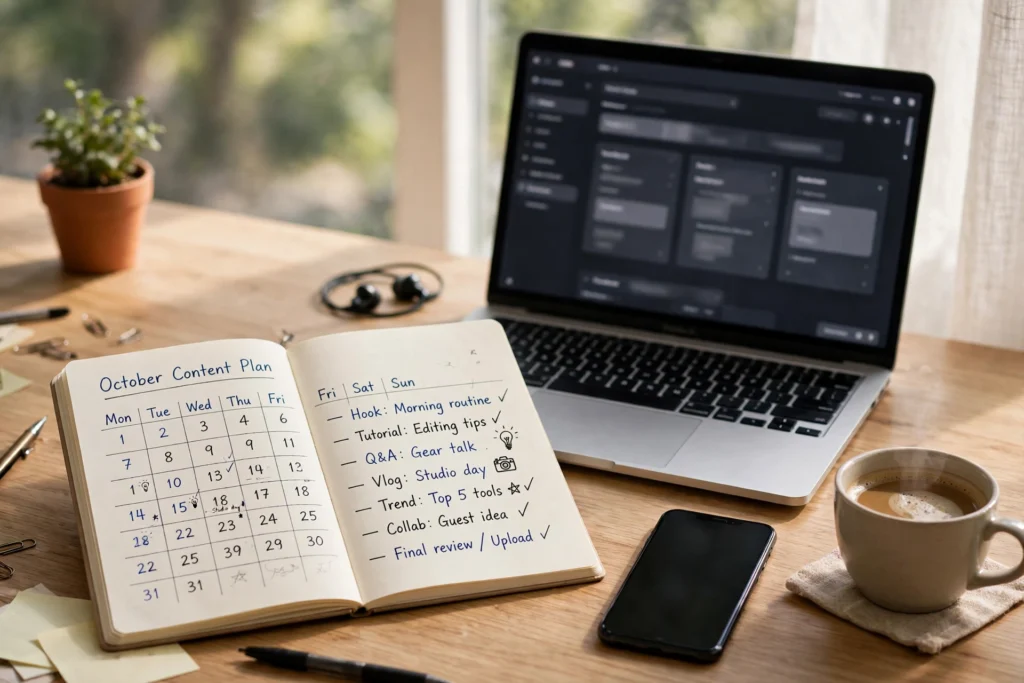
Planning a month of YouTube videos sounds simple until you sit down to do it. You open a blank calendar, stare at the empty days, and suddenly every idea feels either too small or too big. Many creators start the month with strong intentions and end it feeling behind and tired. The problem is rarely a lack of effort. More often, the plan itself asks for too much, too fast, with no room for the rest of life. A good monthly plan gives you clear direction, so you are not deciding what to film on the morning you planned to record, and it protects your energy, so creating stays enjoyable enough to continue.
Start With Your Audience and Your Real Capacity
Before you choose topics, look at two things: who you are making videos for, and how much time you can truly give each week. A channel that tries to speak to everyone usually ends up speaking clearly to no one, and a schedule that ignores work, family, health, and rest usually collapses within two weeks. Think about the person you most want to help. What questions do they ask often? What problems do they run into? What kind of videos do they actually finish? A few sentences are enough. Then be honest about capacity. Count the hours you can give in a normal week, not an ideal week, including scripting, filming, editing, thumbnails, titles, and uploading. If you have four hours a week, that points to a different plan than if you have fifteen. Neither number is wrong. The goal is a plan that fits the hours you actually have.
Collect Ideas Before You Plan Anything
Planning goes better when idea collection and calendar building stay separate. If you try to invent topics while also assigning dates, you will feel pressure on both sides. Instead, start with one relaxed session to gather far more ideas than you need. Aim for twenty or thirty rough ideas, even if some are messy. Good ideas often come from ordinary places: comments on your own videos, questions people send you, topics you keep explaining, mistakes you made early on, and small steps that helped you. Look at older videos too, and ask which ones deserve a clearer follow-up or an updated version. Keep every idea in one list without judging it yet, then sort it lightly. Mark ideas that feel easy, exciting, or heavy. A balanced month mixes all three. Keep the strongest ideas for this month and save the rest for later, so you never fear running out.
Choose a Few Content Pillars
Content pillars are the main themes your channel returns to again and again. They help viewers understand what your channel is about, and they help you avoid starting from zero every time. Most small and mid-sized channels do well with three or four pillars. More than that can make the channel feel scattered. For example, a YouTube advice channel might use planning and workflow, filming and editing basics, lessons from real channels, and honest creator life. A cooking channel might use quick weeknight meals, budget cooking, kitchen skills, and seasonal recipes. Your pillars should reflect both what your audience needs and what you enjoy making, because a topic you dislike will be hard to sustain for months. When you plan the month, spread videos across these pillars instead of clustering one type together. This gives returning viewers variety while keeping the channel focused.
Build a Calendar You Can Actually Follow
Now place ideas on a calendar. Start with your publishing rhythm, not with dates. Decide how many videos you will publish each week, and on which days. Many creators do well with one video per week. Some manage two. Choose a rhythm you could repeat for three months, not just one strong week. Then place your strongest ideas first. Put demanding videos in weeks where you expect more time, and lighter videos in weeks where you expect travel, work pressure, or family commitments. If one week will be busy, plan a simpler video rather than hoping you will somehow find extra hours. A simple video published on time is far more useful than an ambitious video that never appears. Keep the calendar visible and simple. For each video, write the working title, the pillar, the filming date, and the publishing date. Avoid over-planning every detail a month ahead. You need enough structure to act, not so much detail that changing one thing breaks the whole system.
Batch Your Work to Save Energy
Batching means grouping similar tasks together instead of switching between them every day. It works because each type of work uses a different kind of focus. Writing scripts, filming, editing, and designing thumbnails each pull your attention in a different direction, and constant switching wastes time getting started again. One useful pattern is to give each stage its own block: one afternoon to outline two scripts, another day to film both videos, and a separate session to edit them. You do not need to batch the whole month at once. Even batching two videos at a time can make the work feel lighter. It also helps with setup. If you film two videos in one session, you set up lights, camera, and sound once. If you edit in a focused block, you stay familiar with your project files. The aim is not to rush. The aim is to reduce repeated setup and repeated decisions.
Leave Room for Life
A realistic plan includes empty space. Life brings illness, busy weeks, family needs, low motivation, and unexpected tasks. A plan with no slack treats any disruption as failure. A plan with slack treats disruption as normal. That difference matters for burnout. Build in breathing room in simple ways. Plan one lighter week each month, where the video is shorter or easier to produce. Keep one backup idea ready: a simple video you could make quickly if a planned video falls through. Finish videos a few days before they publish, so a late edit does not turn into a missed upload. Rest also belongs in the plan. If you never take a break from thinking about content, your ideas get stale and your energy drops. Some creators take one weekend off each month from filming and editing. Rest is not wasted time. It is part of what makes steady creating possible.
A Sample Monthly Rhythm
Here is one simple rhythm for a creator who publishes once a week. Adjust the days to fit your life. In week one, plan and outline two videos, then film the first one. In week two, film the second video, edit the first, and publish it. In week three, outline the next two videos, film the third, and publish the second. In week four, film the fourth, edit the remaining videos, and publish on schedule. Throughout the month, spend short blocks on thumbnails, titles, and descriptions rather than leaving them all to the last minute. Notice what this rhythm avoids. It does not ask you to write, film, edit, and publish a video in a single day. It spreads the work so each week includes both creative work and finishing work, and it leaves room to move a task by a day or two without missing a publish date. If you publish twice a week, the same idea still applies: keep scripting ahead of filming, and keep filming ahead of editing, so you are rarely working on a video the day it must go live.
What to Do When the Plan Falls Apart
Even a good plan will break sometimes. A video may take longer to edit than expected. A script may not work. You may feel tired or uninspired. The question is not how to avoid every disruption, but how to respond without giving up on the month. Start by shrinking the next step, not the whole plan. If a full video feels impossible this week, can you publish a shorter version? Can you turn one strong section of the script into a focused video and save the rest for later? Can you move the video by a few days instead of skipping the week entirely? Small adjustments keep momentum alive, and momentum is often more valuable than perfection. It also helps to review the plan without blame. Ask what actually happened. Was the video too ambitious? Did editing take longer than expected? Did life get busy? Use the answer to adjust next month. Planning is a skill that improves with honest review, not harsh self-criticism.
Frequently Asked Questions
How far ahead should I plan my YouTube content?
A month ahead works well for most creators. It gives you enough direction to batch work and stay consistent, without locking you into ideas that may feel stale later. If monthly planning feels heavy, start with two weeks ahead and build up gradually.
What if I run out of ideas mid-month?
Keep a running idea list all month, and add to it whenever a question, comment, or personal lesson appears. You can also revisit older videos and make a clearer follow-up, or turn one part of a longer video into a focused new video.
Is it okay to change the plan after the month starts?
Yes. A plan is a guide, not a contract. If a topic no longer fits, if life gets busy, or if a better idea appears, adjust the calendar. The goal is to keep publishing helpful videos on a steady rhythm, not to follow a plan that no longer makes sense.
How do I plan content without burning out?
Choose a publishing rhythm that fits your real weekly hours, batch similar tasks, keep one lighter week or backup idea in the month, and finish videos a few days before they publish. Protect rest time as part of the plan, and review each month to fix the parts that felt too heavy.
What to Do Next
If monthly planning feels overwhelming, start small. Pick your publishing rhythm, list twenty ideas, and place four videos on next month’s calendar. Keep the plan visible, batch what you can, and leave room for life. Small, steady progress will teach you more about your workflow than any perfect system.
If you want help shaping your channel, planning your content, or improving your videos, contact us. You can also explore YouTube growth services, browse more guides in articles, or see everything we offer on our services page.