
Starting a podcast can feel like a large project, but it becomes much simpler when you break it into small, clear decisions. You do not need a studio, a large audience, or a complicated setup to begin. You need a clear idea, a way to record clean sound, and a simple plan for getting your first episode onto Spotify. When those pieces are in place, the rest is a matter of showing up regularly and learning as you go.
Many new podcasters stall because they try to make everything perfect before they publish. They spend weeks comparing equipment, redesigning cover art, or rewriting the same outline. A better approach is to keep the first version simple. Publish one honest episode that helps one kind of listener, then improve the next one based on what you learn. This guide walks through seven practical steps that take you from an idea to a live show on Spotify.
1. Pick One Audience and One Promise
Before you record anything, decide who your show is for and what it will help them do. A podcast that tries to speak to everyone usually ends up speaking clearly to no one. When you know your listener, your topics become easier to choose, your language becomes more natural, and your episodes feel more useful.
Start by describing your listener in one sentence. Think about what they care about, what problem they are trying to solve, and what kind of conversations they already enjoy. Then write one promise for your show. For example, your show might help busy beginners understand one idea each week, or it might share short stories from people learning a new skill. The exact promise matters less than its clarity. If a new listener cannot understand what your show offers in a few seconds, the idea is still too broad.
It also helps to decide what your show will not cover. A clear boundary keeps you focused and makes planning easier. If an idea does not serve your audience or your promise, save it for later or leave it out. Over time, you can widen your range, but in the beginning, focus is your advantage.
2. Choose a Format You Can Repeat
A format is simply the shape of your episode. It might be a solo episode where you talk through one topic, a conversation with a guest, a short teaching segment, or a mix of stories and practical advice. The best format is not the most impressive one. It is the one you can repeat without burning out.
Think honestly about your time, your energy, and your comfort level. If you enjoy talking through ideas on your own, a short solo episode may suit you. If you enjoy asking questions and learning from others, interviews may feel more natural. If your schedule is tight, a shorter episode released regularly will serve you better than a long episode you struggle to finish.
Once you choose a format, give it a simple structure. A short opening that states the topic, a middle section that explores it in a clear order, and a closing that sums up the main point will carry most episodes well. Listeners appreciate knowing what to expect. A consistent structure also makes recording and editing faster because you are not starting from scratch each time.
3. Record With Clear Audio in a Quiet Room
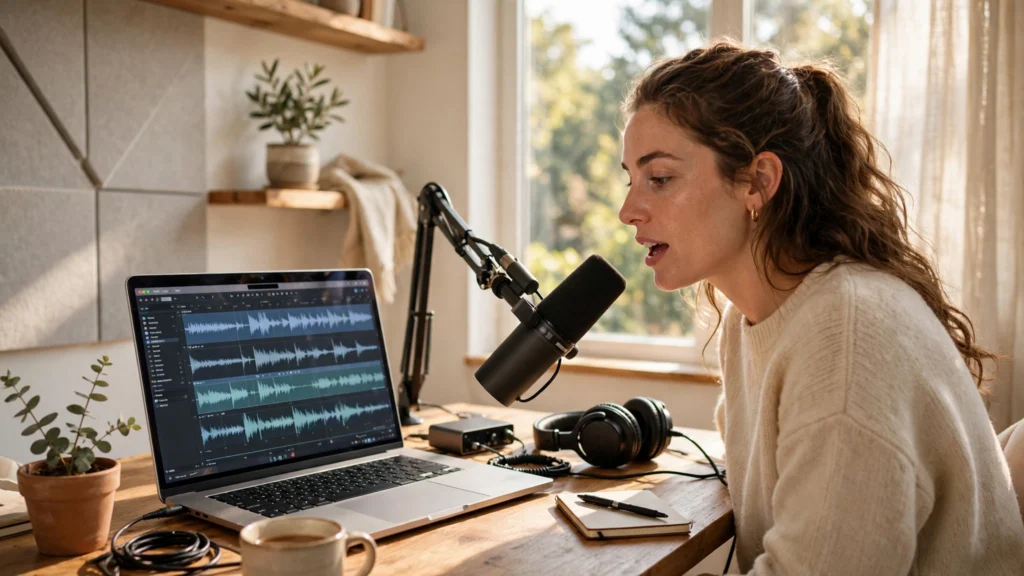
Listeners will forgive a simple setup, but they will rarely stay with audio that is hard to hear. Clear sound matters more than an expensive microphone. The most important step is to record in a quiet room where your voice comes through cleanly.
Choose a small, quiet space with soft surfaces if you can. A bedroom with curtains, a closet full of clothes, or a room with rugs and cushions will usually sound better than a large, empty room. Turn off fans, close windows, and move away from humming appliances. Record a short test and listen to it with headphones. If you hear echo, background noise, or a distant sound, adjust your position or your room before recording the full episode.
Speak at a steady pace and keep a consistent distance from your microphone. You do not need to sound like a broadcaster. A calm, natural voice that is easy to follow will keep listeners engaged. If you make a mistake, pause, take a breath, and repeat the sentence. Small mistakes are easy to fix in editing, and a relaxed delivery sounds far better than a rushed one.
4. Edit Simply and Cut the Filler
Editing is where a rough recording becomes a listenable episode. The goal is not to remove every pause or make yourself sound perfect. The goal is to remove distractions so the listener can follow your ideas without effort.
Start by listening through the recording once and noting the parts that wander, repeat, or lose focus. Cut long silences, false starts, and sections that do not support your main point. If a story runs too long, trim it to the part that matters. If a sentence repeats an idea you already explained, remove it. Tight editing respects the listener’s time and makes your show feel more confident.
Keep your editing tools simple. Most beginners do not need advanced effects or complicated processing. A light adjustment to volume, a gentle reduction in background noise, and a consistent level across the episode are usually enough. When you finish, listen once more from start to finish. If the episode flows clearly and sounds even, it is ready. Do not keep polishing small details that listeners are unlikely to notice.
5. Make Cover Art That Reads at Small Sizes
Your cover art is often the first thing a potential listener sees, and it is usually seen very small on a phone screen. A design that looks good at full size may become hard to read when it is reduced to a thumbnail. Keep your cover simple, bold, and easy to understand at a glance.
Use a short title or a few clear words, not a long sentence. Choose lettering that stays readable when the image is small, and use strong contrast between the text and the background. A single clear image or a simple illustration often works better than a crowded photo with many details. Avoid tiny text, thin lines, and busy backgrounds that blur together at small sizes.
Your cover should also reflect the tone of your show. A calm, thoughtful show might use soft colours and clean shapes. A lively, energetic show might use brighter colours and bolder shapes. You do not need to follow trends. The aim is to make someone pause, understand what the show is about, and feel curious enough to press play.
6. Choose a Podcast Host and Set Up Your Feed
Spotify does not store your audio files directly in the way a traditional host does. Instead, you publish your episodes through a podcast hosting service, which creates an RSS feed for your show. Spotify reads that feed and displays your episodes to listeners. Understanding this one idea makes the rest of the process much clearer.
When you choose a host, look for the basics: a straightforward way to upload audio, space to write episode titles and descriptions, and a feed that can be submitted to listening apps. You do not need every advanced feature at the start. A simple, reliable host that you understand will serve you better than a complex one with tools you never use.
After you create your show on your chosen host, fill in the details carefully. Write a clear show title and a short description that explains who the show is for and what listeners will gain. Add your cover art and complete the show settings. These details become part of your feed, and they shape how your show appears in Spotify and other apps. Take time to get them right, because changing them later can take time to update everywhere.
7. Submit to Spotify and Publish Your First Episode
Once your feed is ready, you can submit it to Spotify. This usually involves adding your feed address to Spotify’s podcast platform, confirming that you own the show, and reviewing how your show will appear. After your show is accepted, new episodes you publish through your host will normally appear on Spotify without you needing to submit each one separately.
Before you publish your first episode, listen to it once more and check the details. Make sure the title is clear, the description explains what the episode covers, and the audio plays from start to finish without gaps. A short, accurate description helps listeners decide whether the episode is for them. Avoid vague wording. State the topic plainly and mention the main idea the listener will take away.
When you are ready, publish the episode and share it with a few people you trust. Early listeners can tell you whether the sound is clear, whether the episode held their attention, and whether the description matched what they heard. You do not need a large launch. One published episode is a real achievement, and it gives you something concrete to improve.
Frequently Asked Questions
How long should my first episode be?
There is no single right length. A first episode that is clear, focused, and easy to finish is better than a long episode that wanders. Many beginners find that a short episode is easier to record, edit, and publish. Choose a length you can repeat, and let your episodes grow naturally as you gain confidence.
Do I need expensive equipment to start?
No. Clear audio in a quiet room matters more than costly gear. A basic microphone, headphones for listening, and a simple recording setup are enough to begin. You can improve your setup later once you know your format and your routine.
How often should I publish new episodes?
Choose a rhythm you can keep. A regular schedule helps listeners know when to return, but consistency matters more than frequency. One episode a week, every two weeks, or once a month can all work if you maintain them. It is better to publish less often and keep going than to promise frequent episodes and stop after a few weeks.
What if my first episode is not perfect?
That is normal. Almost every podcaster improves with practice. Your early episodes are a starting point, not a final standard. Publish, listen, learn, and make the next episode a little better. Progress comes from repetition, not from waiting for perfection.
What to Do Next
Launching your first episode is only the beginning. The next step is to keep a simple routine: plan one clear topic, record in a quiet room, edit with a light touch, and publish on a schedule you can maintain. Over time, you will learn what your listeners enjoy and where your show can grow.
If you would like help planning, launching, or growing your show, contact us and tell us where you are in the process. You can also explore our Spotify growth services, browse more guides in our articles section, or view everything we offer on our services page.