
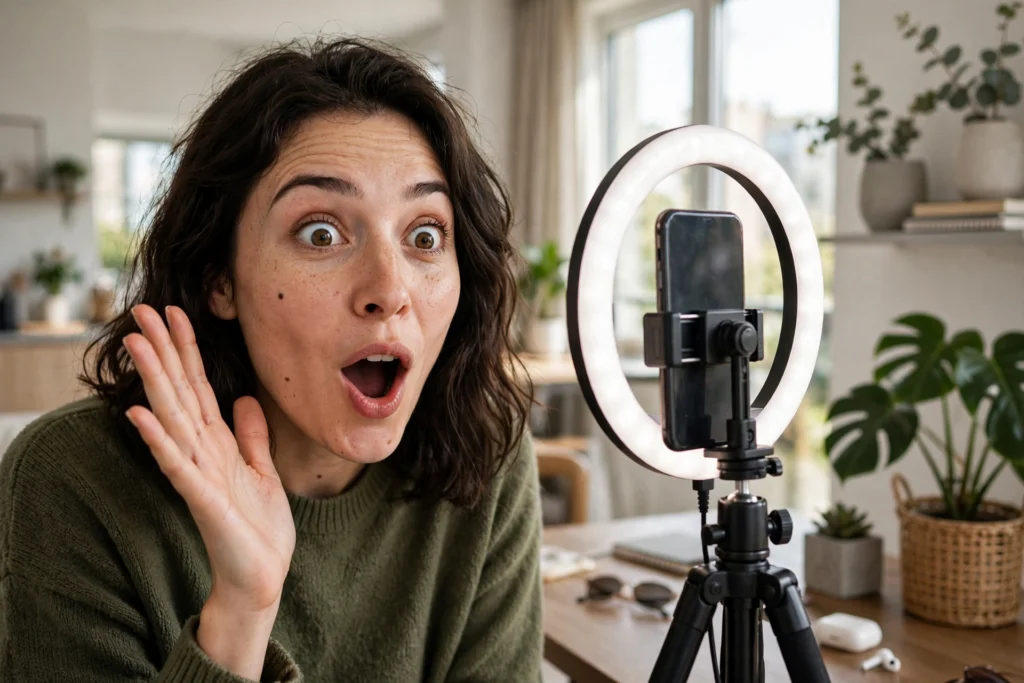
On TikTok, you do not get a minute to earn attention. You get about three seconds. In that tiny window, a viewer decides whether to keep watching or swipe to the next video, and most viewers decide fast. If your video does not give them a reason to stay in those first seconds, the rest of your content never gets a chance, no matter how good it is.
The good news is that hooking viewers is a skill, not a gift. Strong openings follow patterns you can learn, practise, and improve. This guide shows you how to hook viewers in the first three seconds on TikTok, with hook types that work across niches and mistakes to avoid.
Why the First 3 Seconds Decide Everything
TikTok shows your video to a small test audience first. If those viewers swipe away immediately, the video stalls, because the system reads instant swipes as a sign that the video is not worth showing further. If viewers stay, watch, and engage, the video earns a wider audience. The opening is where that decision is made.
That is why the hook matters more than the middle of your video. A strong middle cannot save a weak opening, because most viewers never reach it. A strong opening earns you the chance to deliver the rest. Every second you spend planning your hook pays off more than extra polish on a part viewers may never see.
Hook Type 1: Promise the Payoff
The simplest strong hook is a clear promise. Tell viewers exactly what they will get if they keep watching, and make the payoff sound specific and useful. A promise works because it answers the viewer’s silent question: why should I stay?
Keep the promise short and honest. Say what the video delivers, not what it might deliver. Avoid vague claims like ‘this will change your life’ and use concrete ones instead: the mistake to avoid, the step to follow, the result you will show. A specific promise earns trust; a vague one earns a swipe.
Examples: ‘Three mistakes that kill your TikTok reach, and how to fix each one.’ ‘Here is the exact opening I use for every video.’ ‘Watch me turn this dull clip into a finished video in one minute.’ Each one promises something clear in a single sentence.
Hook Type 2: Start in the Middle
Instead of building up to the interesting part, start there. Open on the result, the reaction, the finished product, or the most surprising moment, then explain how you got there. Starting in the middle creates instant curiosity, because viewers want to know what happened before and what happens next.
This works especially well for transformations, before-and-after videos, and stories. Show the finished room, the final dish, the completed edit, or the surprising ending first. Then rewind and show the process. The viewer stays because they have already seen that the video delivers something worth watching.
Hook Type 3: Use a Pattern Interrupt
A pattern interrupt is a sudden change that breaks the viewer’s scrolling rhythm: a quick cut, a surprising visual, an unexpected sound, or a bold statement that contradicts what viewers expect. The goal is not to shock for its own sake. It is to make the viewer pause for one extra second, which is often enough for your content to take hold.
Keep interrupts relevant to your video. A random loud noise or an unrelated clip may stop the scroll, but viewers leave just as fast when the video turns out to be about something else. A relevant interrupt, like showing the surprising result first or asking an unexpected question, holds attention because it connects to what comes next.
Hook Type 4: Ask a Question That Demands an Answer
A well-chosen question pulls viewers in because the brain wants the answer. Ask a question your audience is already thinking about, or one that challenges what they assume. The question must feel personal and specific, not generic.
Examples: ‘Why do your videos stop at two hundred views?’ ‘Are you making this posting mistake?’ ‘What would you do if this happened to you?’ Each one creates a gap the viewer wants to close by watching. Follow the question immediately with the start of the answer, so the viewer does not have to wait.
Mistakes That Kill Hooks
The most common hook killer is a slow start: a long greeting, an intro animation, a recap of the last video, or a joke that needs ten seconds of setup. Every second of warm-up is a second in which the viewer can leave. Cut the warm-up and start with the hook.
Other killers include a mismatch between the hook and the video, clickbait that the video never delivers, and a hook that is too vague to mean anything. If your opening promises something the video does not deliver, viewers leave and trust drops. Promise only what the video actually delivers, and deliver it quickly.
Test and Improve Your Hooks
Do not guess which hooks work. Post videos with different openings on similar topics and compare how long viewers stay. Keep the hook style that holds viewers longest and drop the ones that lose them. Small changes, like reordering the first sentence or cutting two seconds of setup, can make a visible difference over time.
Frequently Asked Questions
Should the hook be different from the rest of the video?
No. The hook should be the most compelling part of the same video, not a separate trick. It promises what the video delivers, then the video delivers it.
Can I use the same hook style for every video?
You can, but variety works better. Rotate between promise, in-the-middle, pattern interrupt, and question hooks so your feed does not feel repetitive. Track which style holds viewers longest in your niche.
How do I know if my hook is working?
Watch how long viewers stay. If most viewers leave in the first seconds, the hook needs work. If viewers stay past the opening and watch to the end, the hook is doing its job.
Should I add text on screen in the first three seconds?
On-screen text can help, because it restates the promise for viewers watching without sound. Keep it short, large, and easy to read, and make sure it matches what you say.
What to Do Next
Before your next video, write your hook first. Choose one hook type, state the promise in one sentence, and cut everything before it. Film the hook with energy, good light, and clear audio. Then test it honestly: did viewers stay? Improve one thing, and try again.
If you want help planning stronger openings, improving retention, or building a steady growth plan, contact Creators Panda or explore our TikTok Services. You can also browse more guides in our Articles and learn how our Services support creators.